
Conservation & Artistic Inspiration Sets the Scene for Family Camp Along Long Lake
When the Mills and Gladitsch families purchased acreage along Long Lake in Chippewa County in 1993, they shared a vision of preserving its natural beauty. They worked with Landmark Conservancy to place a conservation easement on the property in 2007, ensuring that it remains untouched by development. Now, this peninsula of forest, wetland, and over 3,300 feet of shoreline sits as a remarkable piece of land where for the Mills, summers are filled with family gatherings and the natural world serves as a canvas for artistic expression.
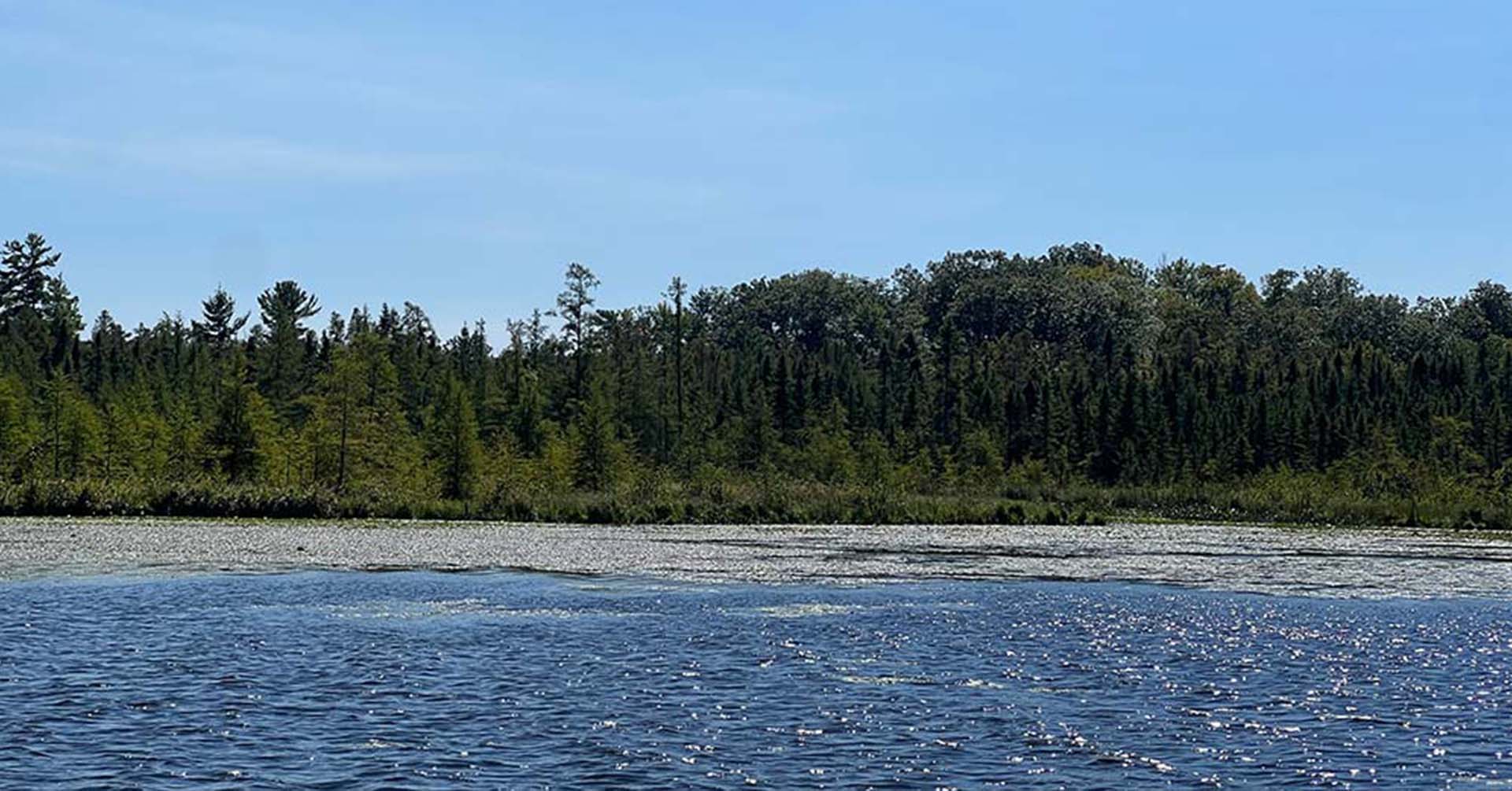
Shoreline of Mills easement on Long Lake in Chippewa County.
For decades, the Mills and Gladitsch families have gathered on the shores of Long Lake each summer, creating a tapestry of cherished memories. “Every year, we host what we call ‘Gladitsch Camp,’” Dave Mills shared. “It’s a week where everyone—family members from Colorado, Florida, the Twin Cities, and beyond—comes together to enjoy time on the water, meals by the campfire, and songs under the stars.” Gatherings often involve 25 to 30 family members, with nights around the campfire, filled with songs, laughter, and storytelling. “It’s a beautiful, chaotic celebration of family,” Dave said.
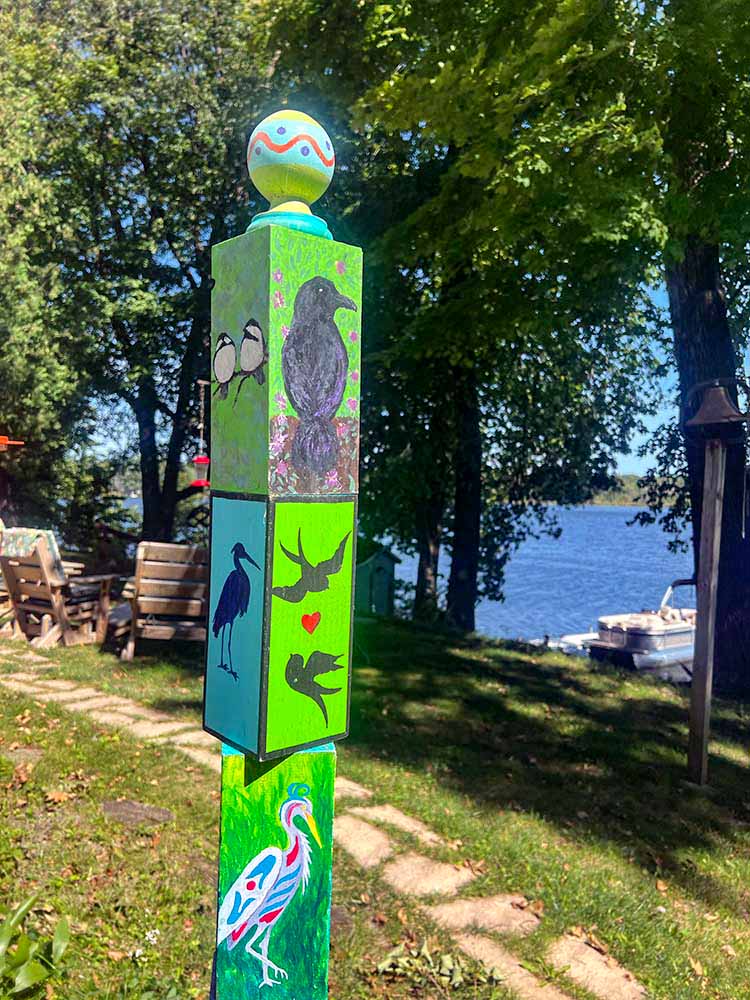
Example of Teri’s artwork on the island.
For Teri Mills, the land is more than a family retreat—it’s her artistic sanctuary. A talented and passionate artist, Teri finds endless inspiration in the changing seasons and diverse landscapes of the property. Whether it’s the vibrant wildflowers in spring, the towering ferns along the trails, or the rich textures of oak and maple bark, every corner of the land offers her something new to incorporate into her work.
“Teri loves capturing the different views the property provides throughout the year,” Dave explained. “Her artwork reflects the essence of the land—from delicate depictions of wildlife to abstract renderings of the forest’s textures and colors.” Her creative projects often include sketches of the wildflowers that blanket the island in May and paintings that highlight the interplay of light and shadow among the trees. Teri’s artwork, displayed throughout their home and along the property’s trails, is a visual reminder of their deep connection to the land.
The property’s natural beauty is rivaled only by its historical significance. A friend of the Mills uncovered with a metal detector that the land could have once served as a seasonal camp for Native American tribes, likely the Ojibwe. Artifacts such as a copper spear point, dated back several thousand years, have been discovered on-site. “We have the spear point framed next to the original deed, which bears the signature of Ulysses S. Grant,” Dave noted. “Holding pieces of history in our hands is humbling.”
The Mills conservation easement connects to other protected properties along Long Lake, creating a continuous network of conserved lands that benefit wildlife and protect water quality. A study in 2001 by the Department of Natural Resources identified the lake’s Critical Habitat Areas, those areas most in need of permanent protection. These areas support wildlife and fish habitat, provide the mechanisms that protect the water quality in the lake, harbor high quality plant communities and preserve the places of serenity and aesthetic beauty for the enjoyment of lake residents and visitors.
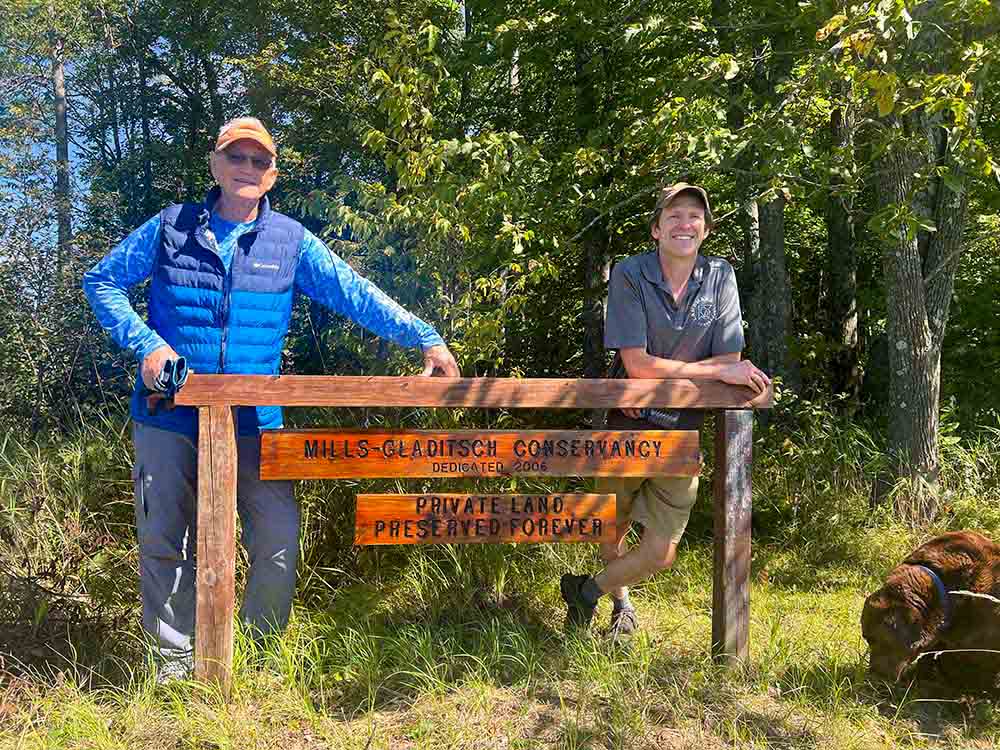
Dave Mills and Rick Remington in front of the Mills-Gladitsch Conservancy sign on the property.
For Dave and Teri Mills, knowing that their land contributes to a larger conservation effort is incredibly rewarding. As they reflect on the decades spent on Long Lake, the Mills family sees the conservation easement as a gift to future generations—not just for their family but for the community. The land will continue to serve as a sanctuary for wildlife, an artistic muse for future creators, and continue to preserve shoreline integrity along a well-loved destination in Chippewa County.