
Hay Creek Wetlands Project Preserves and Extends Essential Habitat

A view of Hay Creek on the conserved property.
Landmark Conservancy has partnered with Jan and Rick Neville to protect 320 acres of largely undeveloped forest and wetland in Sawyer County. The land borders the Chequamegon National Forest to the east and the 547-acre Hay Creek Springs property to the north, which was also protected by the couple with a conservation easement in 2023.
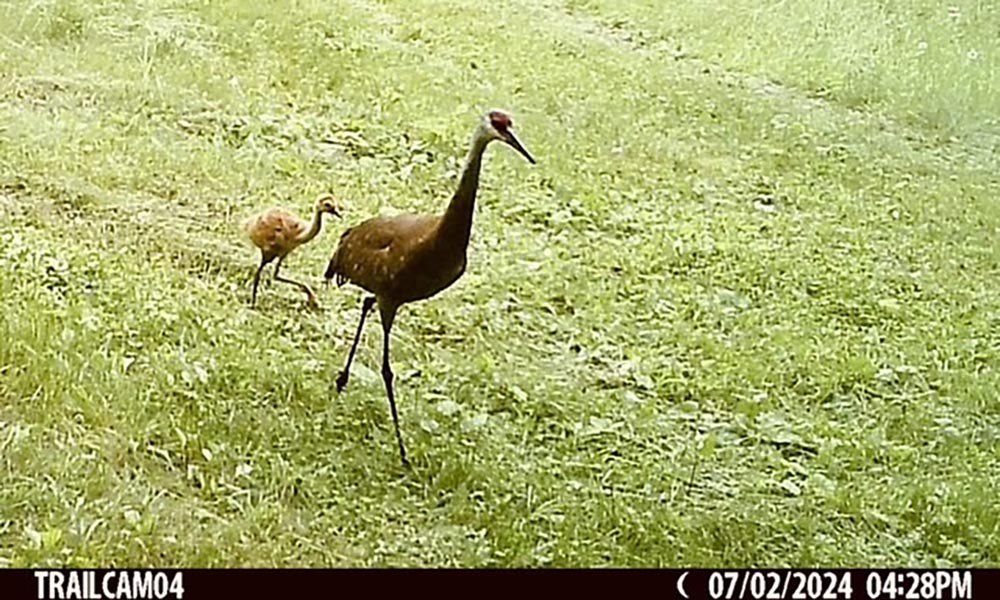
Cranes on trail camera. Photo credit: Rick Neville
“This area is experiencing significant development pressure. Protection of this property provides a needed buffer for many species who rely on the National Forest for their survival,” said Landmark’s Conservation Manager Andrew Norman.

Bobcat on trail camera. Photo credit: Rick Neville
Hay Creek flows through the property for about a half-mile and is classified by the Wisconsin Department of Natural Resources as a Class II trout stream, which means it supports some natural trout reproduction .
Jan and Rick have been working to promote pollinator habitat by converting an old soybean field into prairie. They are in their third year of successfully establishing native grasses and forbs, and have planted white oak, hawthorn, and hazelnut around the perimeter of the open area. Their habitat management focus is to promote a diverse forest community with varied species composition, age classes, and woodland edge, supporting both game and non-game wildlife.

Pollinators like this swallowtail will benefit from restoration efforts on the conserved property. Photo credit: Rick Neville
The Neville’s recently met with Rocky Mountain Elk Foundation to build a partnership benefitting both land conservation and elk management. Once widespread across North America, native elk were eliminated from Wisconsin in the 1880s due to unregulated hunting and habitat loss. The Rocky Mountain sub-species was reintroduced in 1995 and again in 2017, and the 2026 statewide population is projected to be about 600 elk. These majestic mammals are approximately 3-4 times larger than deer and about two-thirds the size of moose.
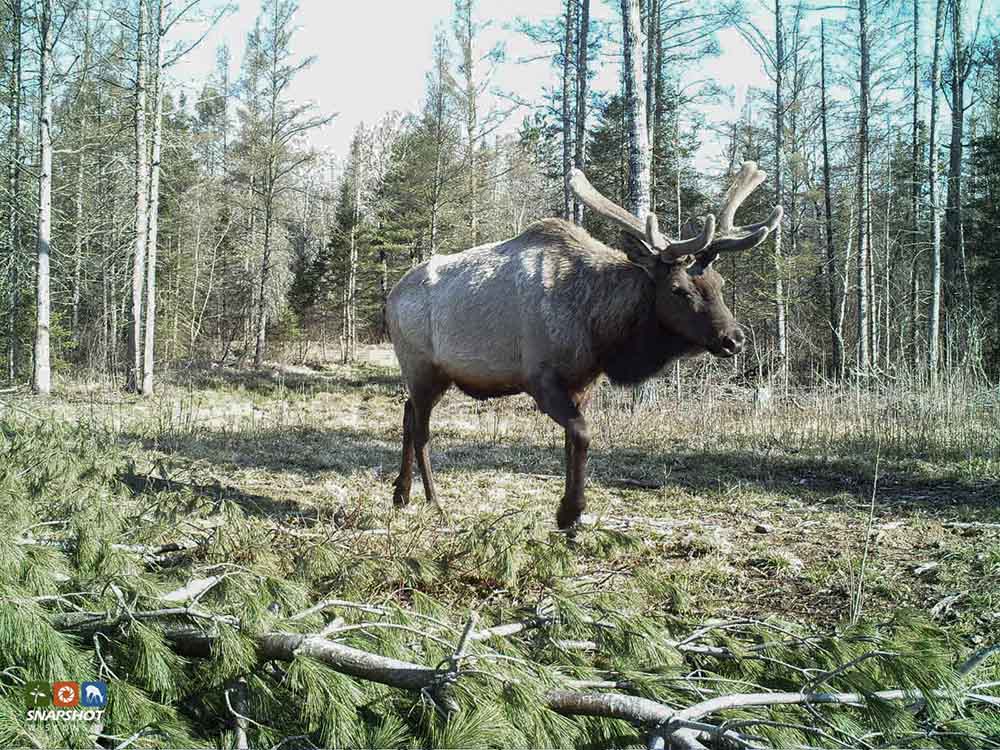
The Neville’s conservation easement extends habitat for species like elk. Photo credit: Snapshot Wisconsin

Elk in the Clam Lake Herd gather in a forest opening. Photo credit: Snapshot Wisconsin
Jan and Rick have been advised by Josh Spiegel, Wisconsin DNR wildlife biologist, to do a controlled burn to further manage open areas and promote oak regeneration, with the goal of generating additional forage for deer, grouse, and elk. These forest openings and management areas provide important food resources for elk during spring recovery, calving, and calf rearing seasons, while also drawing them away from roadways and crops.
“In Northern Wisconsin, most of the landscape is forested. The Neville’s vision includes not only their property, but also a landscape level, “said Speigel. “The Hay Creek property offers a unique opportunity to protect a large ecosystem complex while actively managing for a critical habitat including grasses, young successional forest, and oak regeneration within Sawyer County and the Northern Wisconsin Elk Management Zone.”
Another land protection goal is to provide additional acreage to students who are enrolled in Hayward’s Northern Waters Environmental School and youth who participate in conservation education through SCOPE (Sawyer County Outdoor Projects and Education). Jan and Rick feel passionate about the importance of engaging the next generation in environmental education and experiences.
“We understand that our time as stewards of this land is limited,” Rick said. “The future of Wisconsin’s wild places will soon rest in the hands of today’s youth, and we’re honored to share our land with the young people who will carry that responsibility forward.”
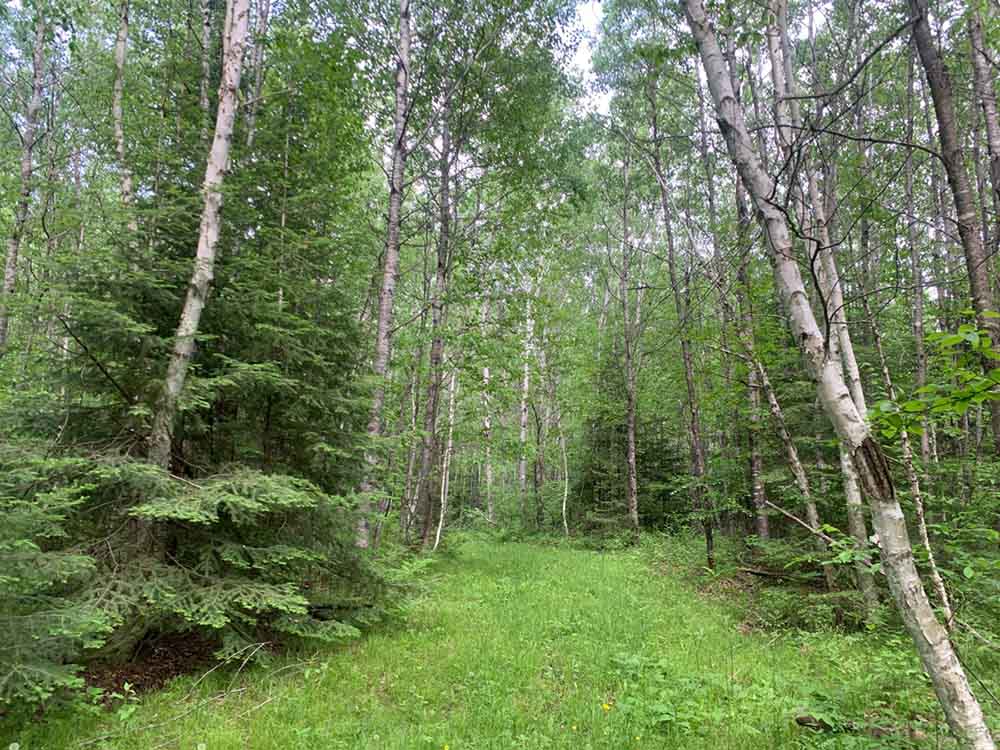
Intact forest on the property is important for wildlife and water quality.
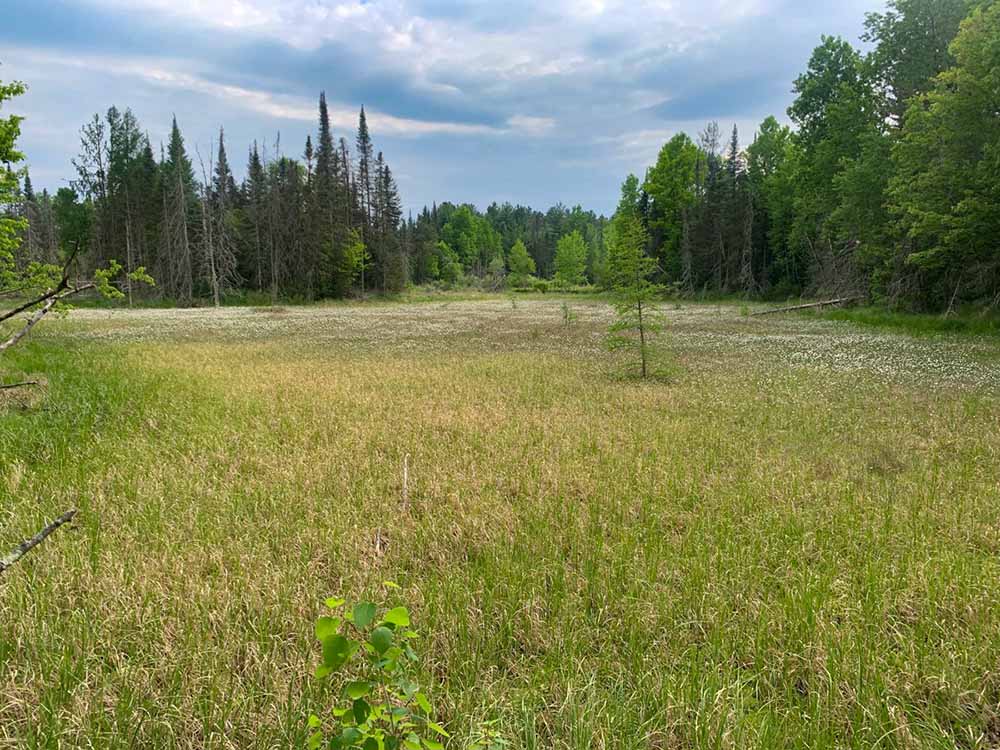
Thank you Jan and Rick for your forward thinking and dedication to protecting the future of the forest and animals in northern Wisconsin!
This is outstanding a big thank you to the Neville’s for making such a commitment to do this All i can say is well done! This is wonderful for the wildlife and the environment for this generation and hopefully generations to come
Way to go Rick and Jan! It’s fantastic you two are thinking about the future of preserving Wisconsin’s widelife and natural habitat. And most important of all, thinking of the kids who inherit your love of preserving some of what Wisconsin is , was, and what can be.
Thank you for your unselfish action to promote and sustain habitat as well as encouraging the next generation to learn stewardship of that land.