
Lizard Species Helps Guide Restoration Decisions
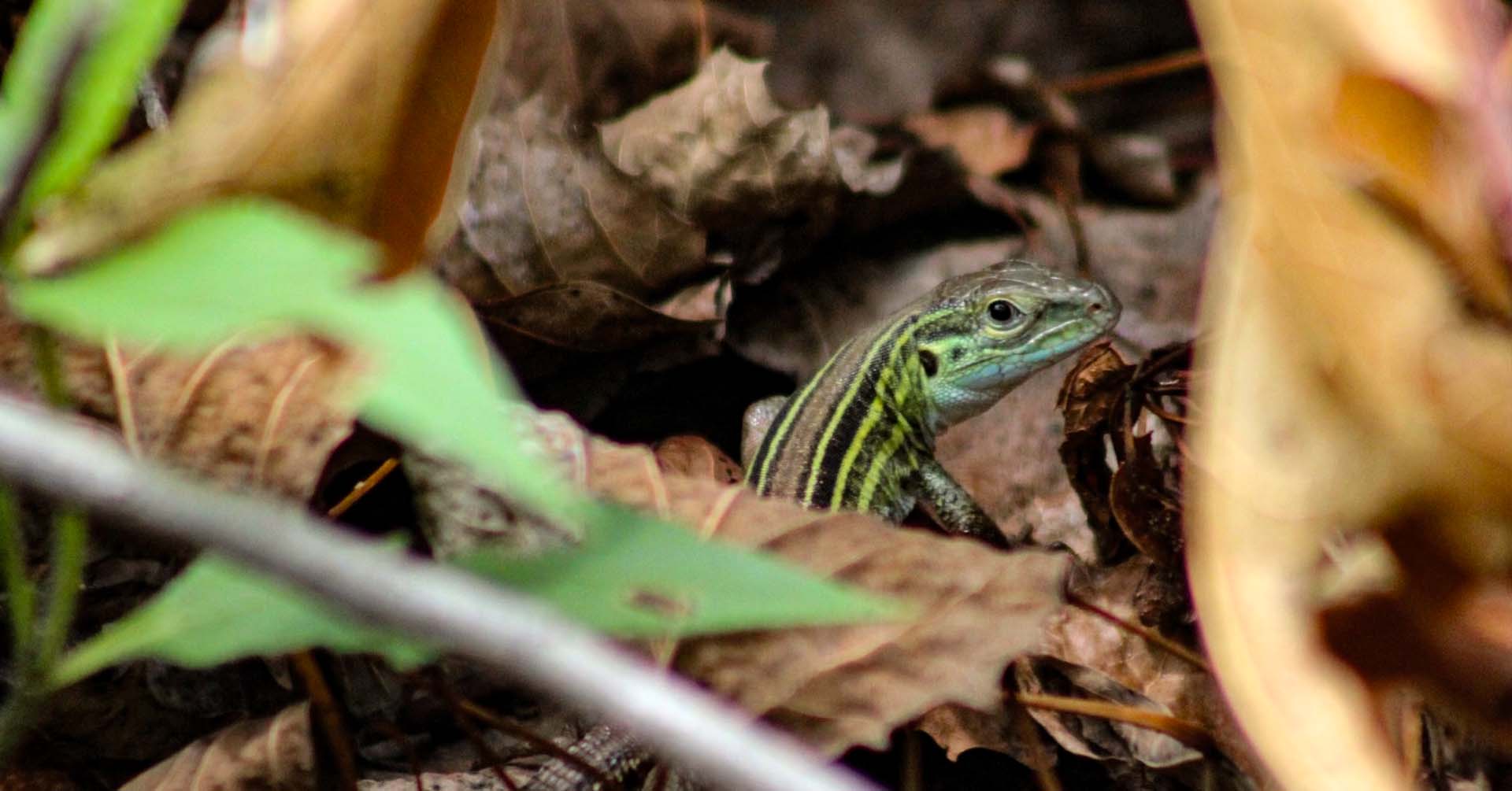
Lizard in leaf litter.
Skitter, scamper, skuttle, scurry. If you listen very closely, you might hear small lizards racing around on a hot day at Landmark’s Elk Creek Bottoms Preserve, but you may not see these small reptiles that can reach speeds of nearly 18 miles per hour.
Wisconsin is home to four lizard species, each with similar physical traits and habitat requirements. They all need sandy soils for burrowing and hibernating. Their habitat is limited throughout the state and has patchy distributions. Like other reptiles, lizards are ectothermic or “cold-blooded” animals that thrive in open, sunny, and hot environments.
One Wisconsin lizard species, designated as a Species of Greatest Conservation Need, utilizes the habitat at Landmark’s Elk Creek Bottoms Preserve on the Chippewa River in Dunn County.
Species of Greatest Conservation Need have declining populations and require conservation action, like habitat protection and management. The presence of these lizards at this site has been one of the driving forces for recent management efforts.
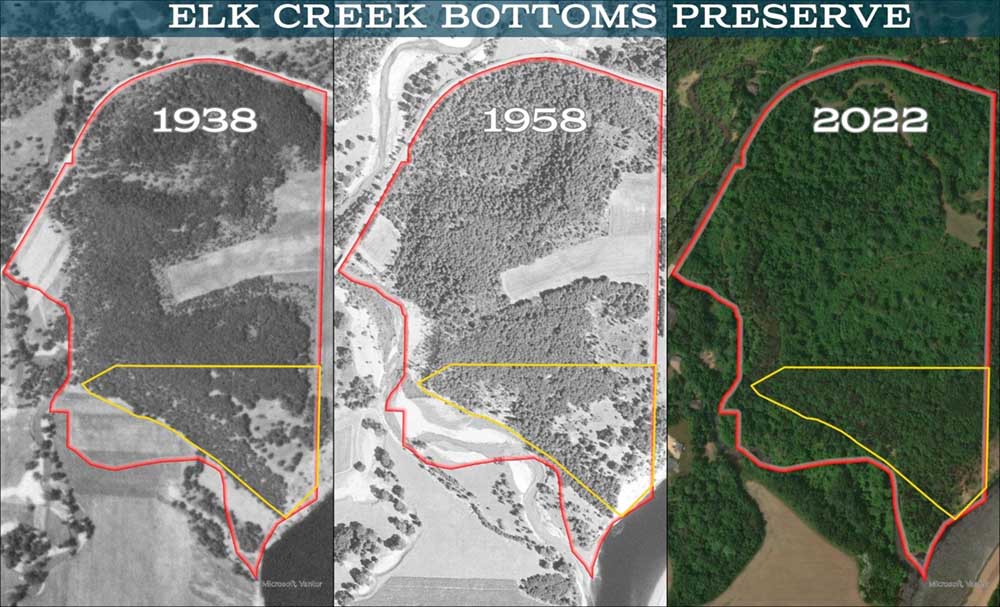
Elk Creek Bottoms Preserve outlined in red with focus area for habitat restoration highlighted in yellow. Click any image to enlarge.
By comparing aerial imagery from 1938 and 1958 to present day, it’s evident that trees and brush have encroached on the sandy, south-facing dry bluff prairie and open oak woodland over the years. Additionally, native plant and tree species documented on site indicate that this area was once more open.
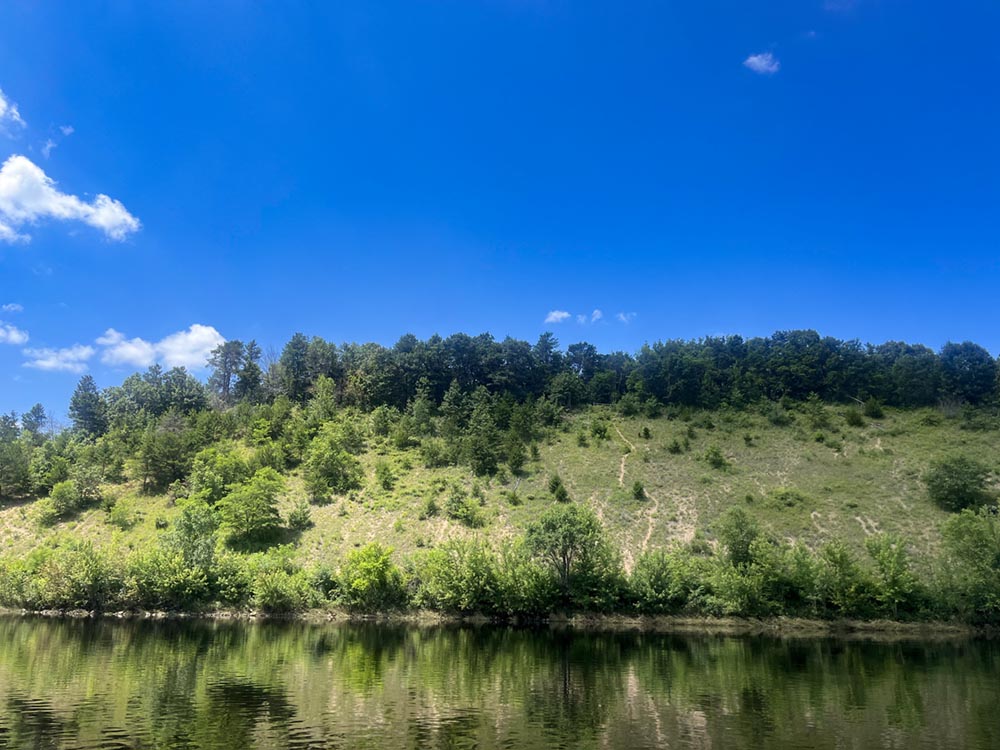
Trees encroaching the south-exposed dry bluff prairie. Credit: Sara Norman
With support from a State Wildlife Grant, habitat restoration ramped up in 2025 with one primary goal: decrease canopy cover to increase sunlight. Three main land management activities support this:
- Removal of trees that have encroached on these habitats.
- Removal of invasive buckthorn and honeysuckle (with the help of 40 volunteers!).
- Use of prescribed fire to suppress competing trees and shrubs, recycle nutrients to the soil, and benefit native grasses, wildflowers, oaks, and Jack pines found on site.
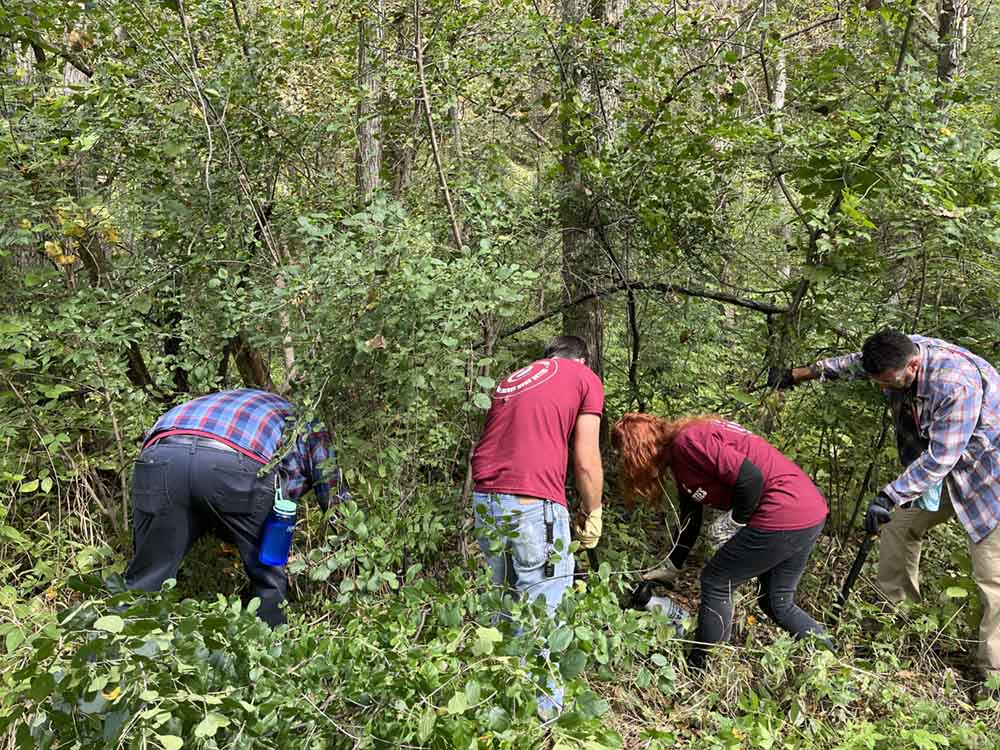
Volunteers cutting buckthorn.
“New land protection is at the heart of what we do, and restoring these habitats gives us a chance to take that commitment even further. We are grateful to our donors, partners, and volunteers whose support ensures the protection of these species and their habitats for present and future generations.”
Collaboration has been key to identifying and implementing our restoration path. Biologists, herpetologists, and land management contractors have informed decisions about the appropriate canopy cover to leave; insect repopulation in burned areas; dates the lizards emerge from hibernation, and more.
Habitat loss is the primary threat to many species, including reptiles like lizards. This multifaceted approach to restoration will increase sunlight to the site, providing lizards and other species adapted to open landscapes with the habitat conditions they need to thrive.
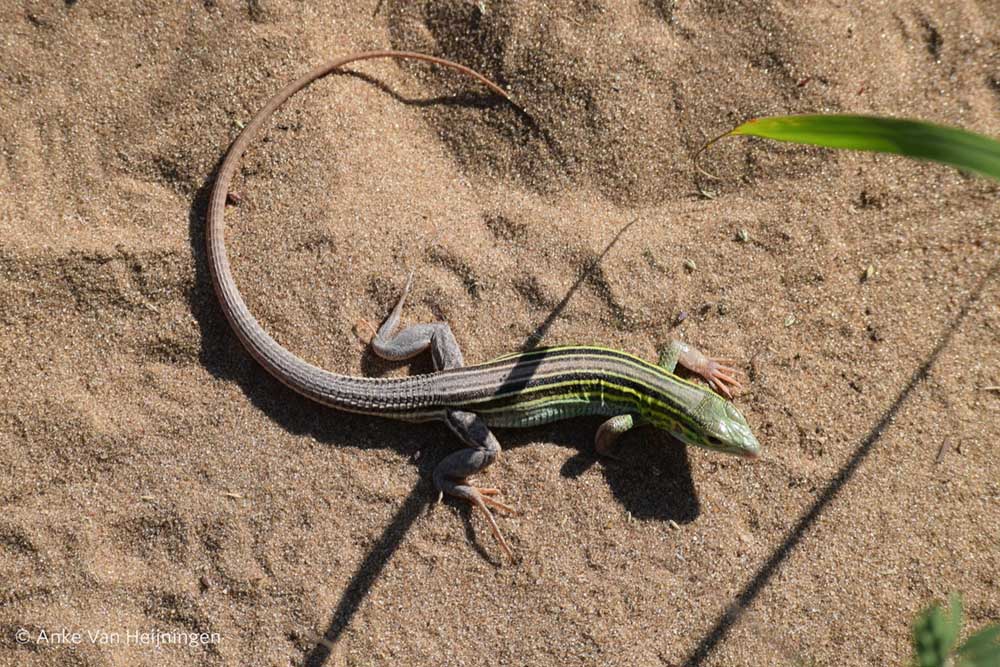
Lizard in sparsely vegetated sandy area. Photo credit: Anke van Heijningen
Never capture or take any wildlife from wild places. Observe them at a respectful distance. Take only photos and memories!
The name of the lizard species was omitted from text in this online article.
The illegal capture, trafficking, and trade of animals remains a significant issue for many species in the state of Wisconsin and beyond.
The 69-acre Elk Creek Bottoms Preserve was permanently protected through partnership with The Nordic Collaborative (f.k.a. the Midwest Institute of Scandinavian Culture) and the Knowles-Nelson Stewardship Fund, with support from our donors in 2022.
Help protect Wisconsin’s species and the habitat they rely on by making a gift to Landmark Conservancy today.