
Conservation Legacy Will Endure Through Protection of White River Property
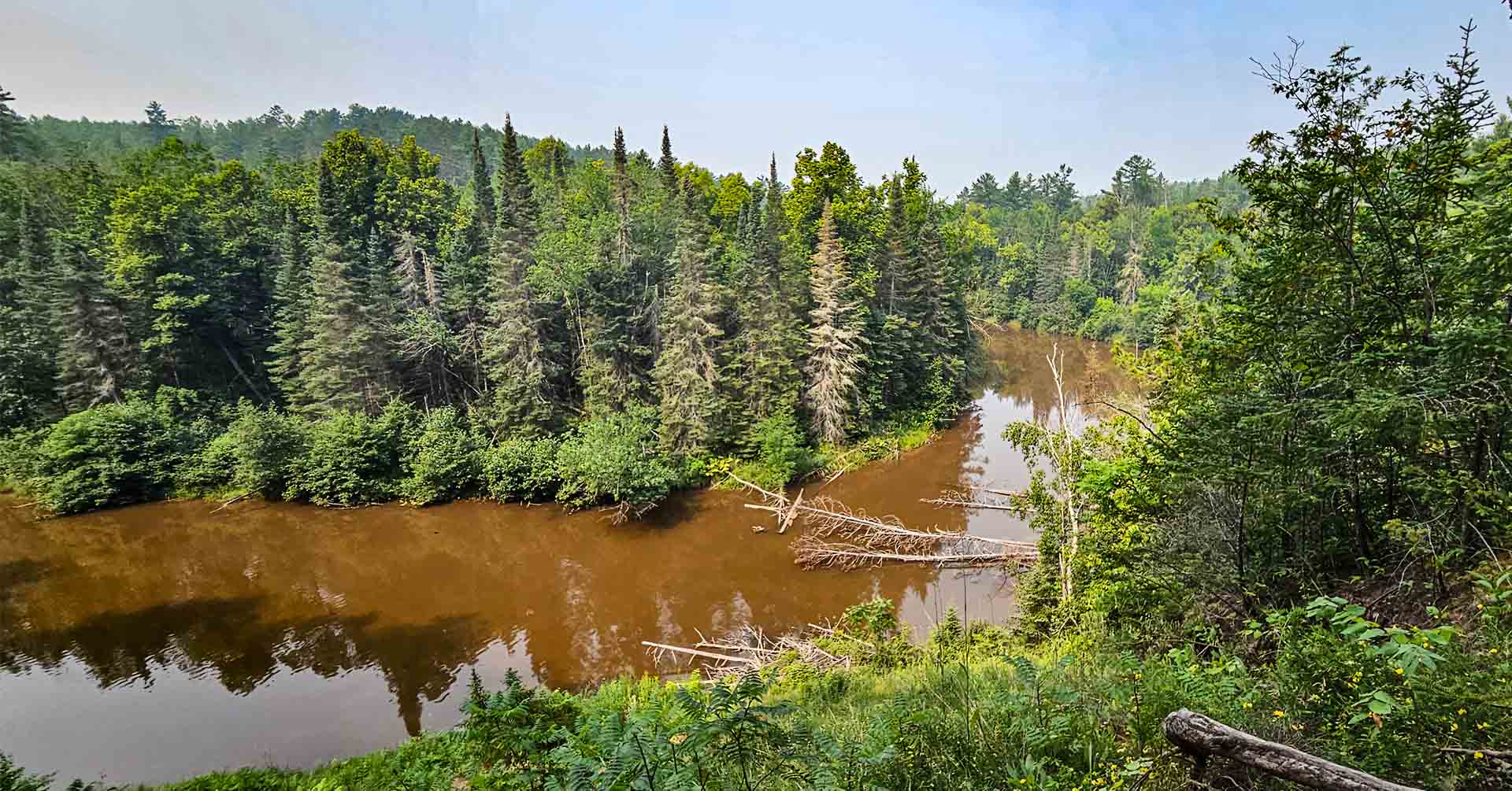
Upstream view of the White River.
Northland College students and faculty gathered for decades among majestic pines along the White River to engage in environmental learning, research, and outdoor education. Located a few miles south of Ashland, the property known locally as Maxwell Forest is perched above steep clay bluffs near the intersection of Highway 112 and Highway 118.
Experiencing nature in this forest helped students develop a deep appreciation for the interconnectedness of wildlife, ecosystems, and people. When the college closed its doors last year, some faculty, students, and community residents worried about the fate of the property as a natural area and reached out to conservation organizations for assistance.
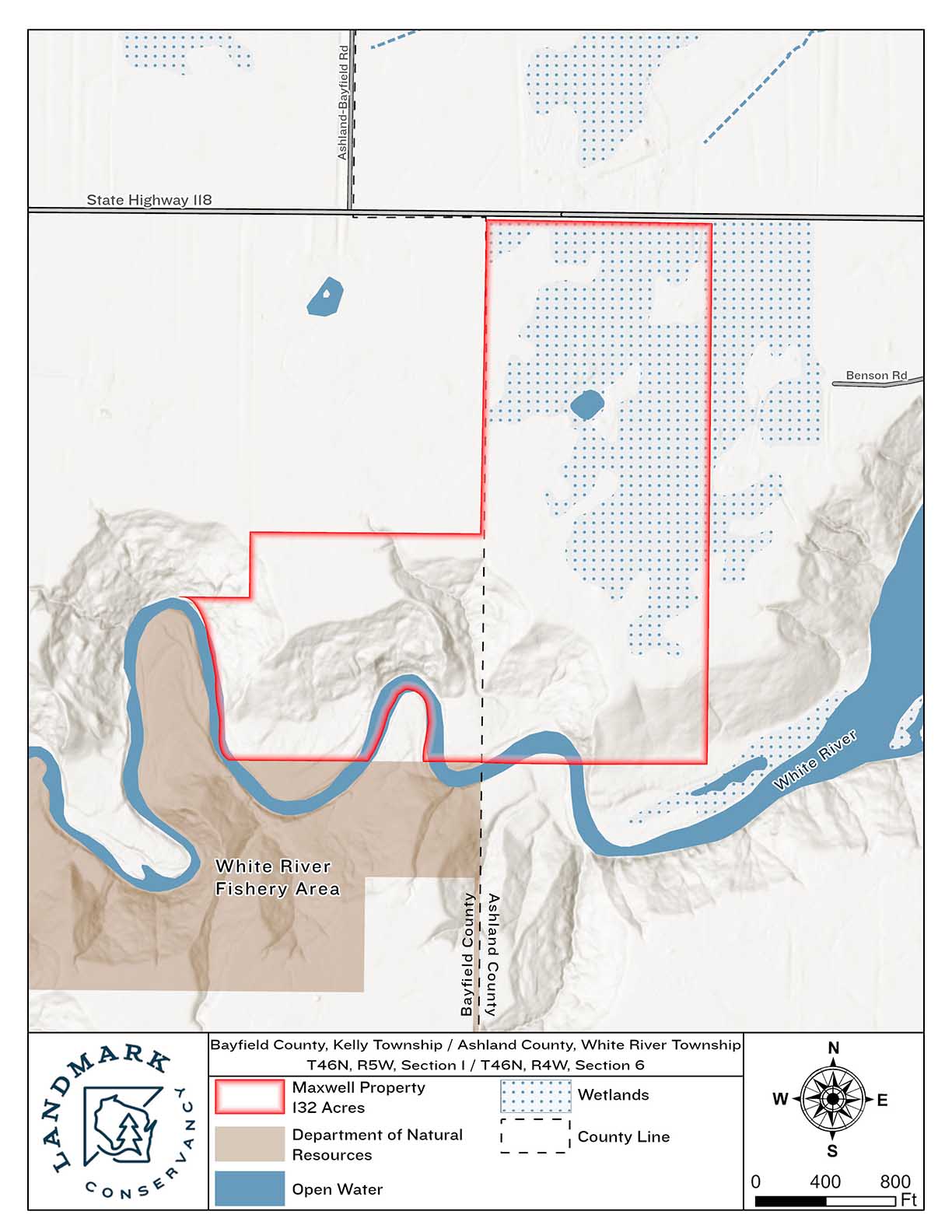
Maxwell Forest map. Click image to enlarge.
Landmark Conservancy led the charge to protect this 132-acre forest in the White River Watershed, working with partners to secure grant funding that resulted in the purchase of the property last week. “Over the past year, Landmark staff has been negotiating with the Northland College’s Board of Trustees while securing support from Ashland County, Bayfield County, the local townships, and funding partners,” shared Rick Remington, Landmark’s Executive Director.
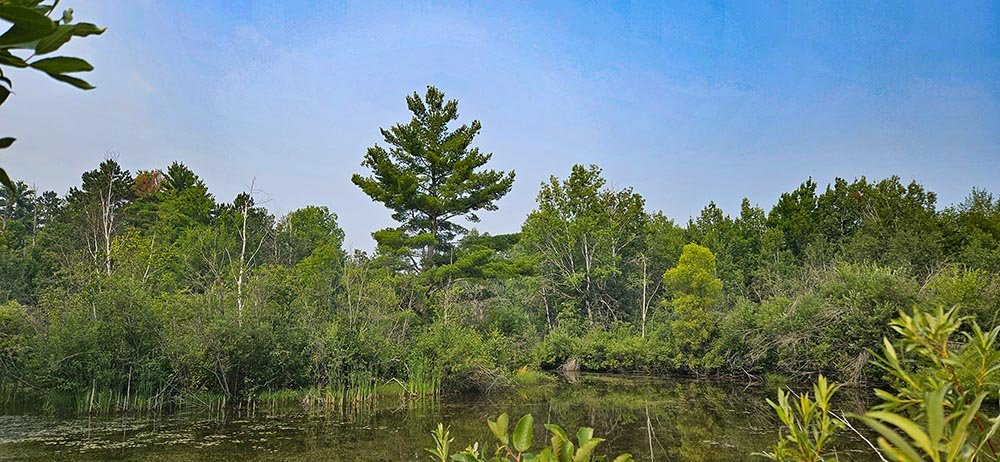
Small pond on the property.
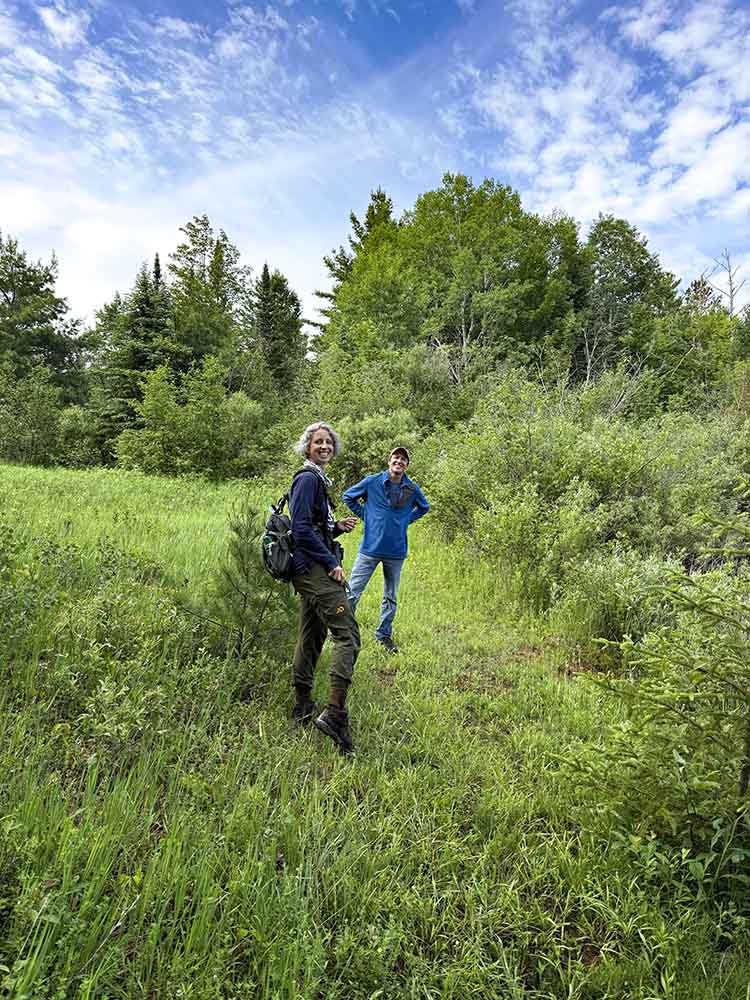
Erika Lang and Rick Remington visit the property.
As a tributary to Lake Superior, the White River watershed has long been a focus of conservation work and is home to the State of Wisconsin’s White River Fishery Area which is adjacent to the purchased property.
Funds were secured through the Wisconsin Coastal Management Program, the Wisconsin Department of Natural Resources’ Knowles-Nelson Stewardship Program, the Great Lakes Protection Fund, the Four Cedars Environmental Fund of the Boreal Waters Community Foundation, the Wisconsin State Council of Trout Unlimited’s Watershed Access Fund, and the Wild Rivers Chapter of Trout Unlimited.
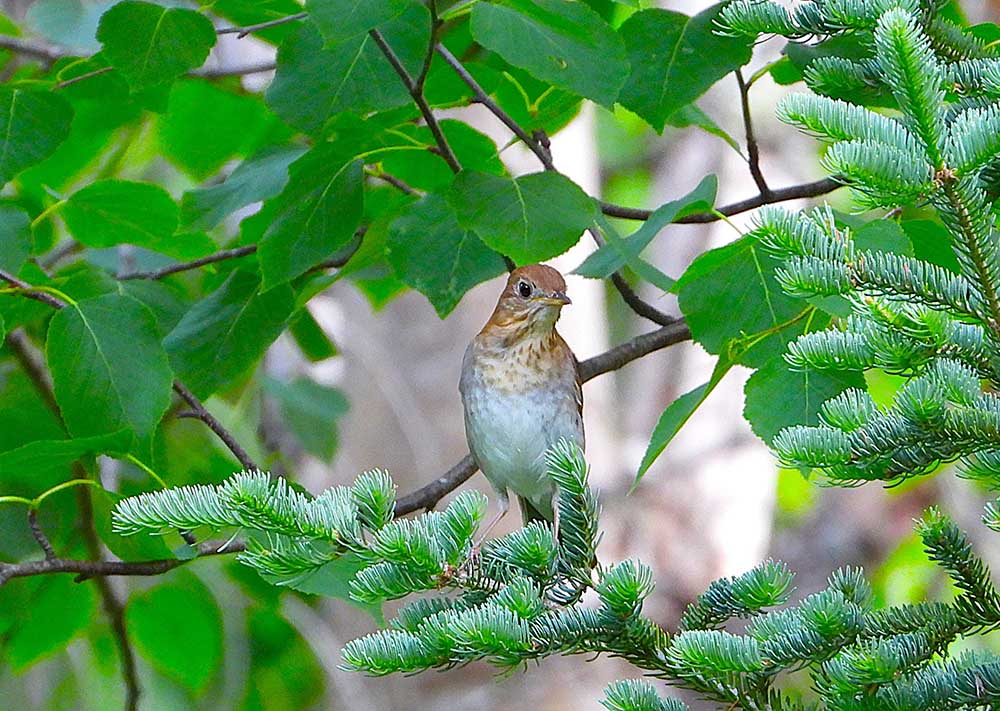
Veery at Maxwell Forest.
As students learned through various research projects, the property supports a wide range of wildlife and is a great spot for birding in the spring. “We hope people come out to enjoy hiking, hunting, fishing, birding, snowshoeing, or another silent sport and in doing so, are inspired to be better environmental stewards,” shared Erika Lang, Landmark’s Conservation Manager who led the project.
“We are excited to help protect water quality and wildlife habitat through land protection. And it is a bonus to have helped to continue Northland College’s environmental legacy.”
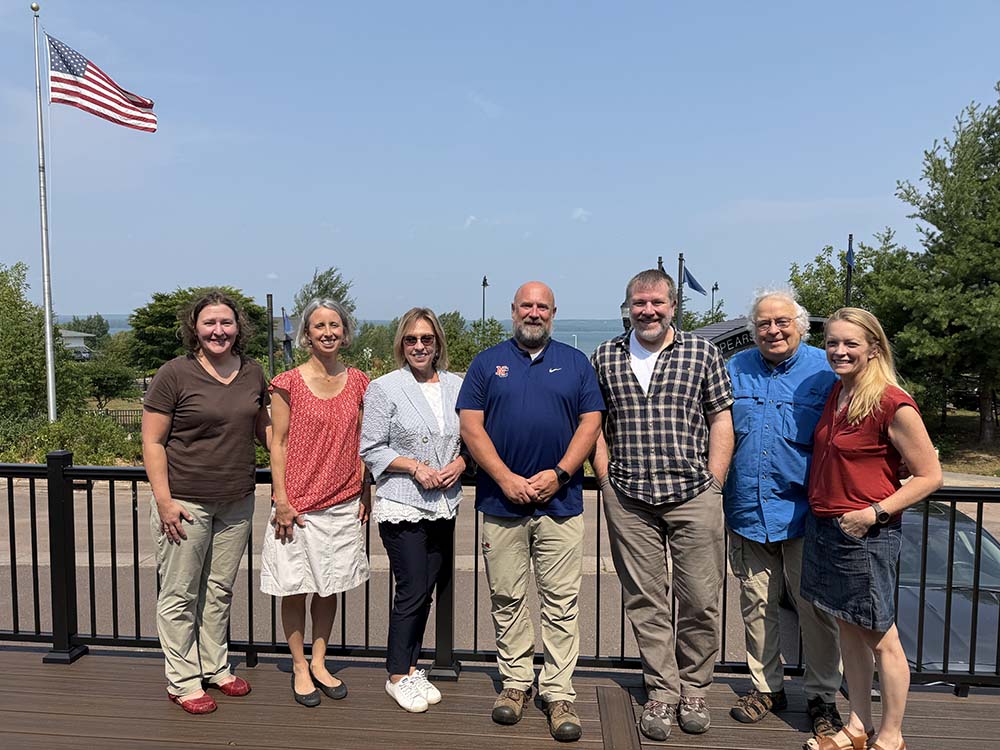
Maxwell property closing.
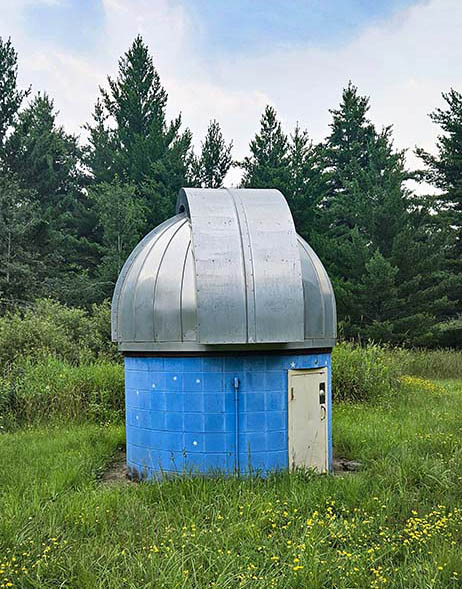
Maxwell Forest Observatory.
Remington said, “We were thrilled to bring these partners together with the community to conserve this special forest and pleased to have the project selected for funding from the state’s Knowles-Nelson Stewardship Program before the program expired.”
Landmark has transferred the property to Bayfield County, who will manage it according to the grant restrictions with the goal that the property will become part of the state’s fishery area. September trail workdays will be announced later this month.