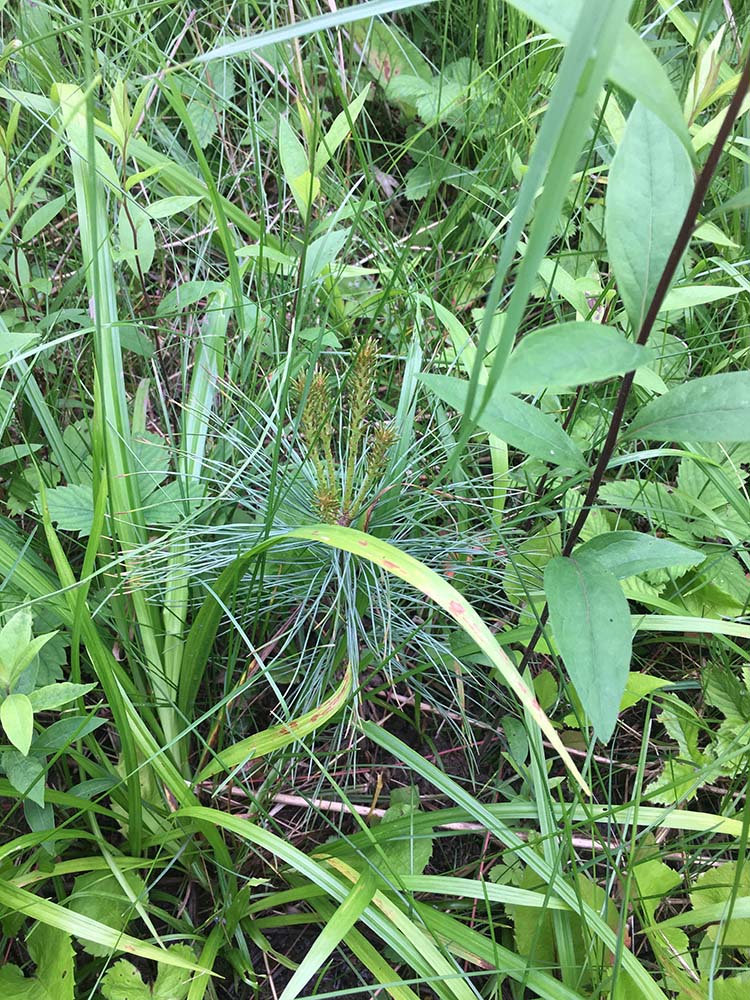
This spring, Landmark Conservancy planted 2,000 tree and shrub seedlings at the Mouth of the Middle River Conservation Area with grant funding from the Land Trust Alliance. The 53-acre property was permanently protected in partnership with conservation organizations and the local community in 2020 and includes one-half mile of Lake Superior shoreline.
Located in Douglas County, the Middle River is a priority watershed for restoration activities to protect water quality and restore hydrologic connectivity. At its confluence with Lake Superior, it forms a freshwater estuary like other south shore streams. The mixing of water results in unique and important habitats for plants, insects, fish, and birds. Soils in the Mouth of the Middle Conservation Area are characterized by thick clay deposits.
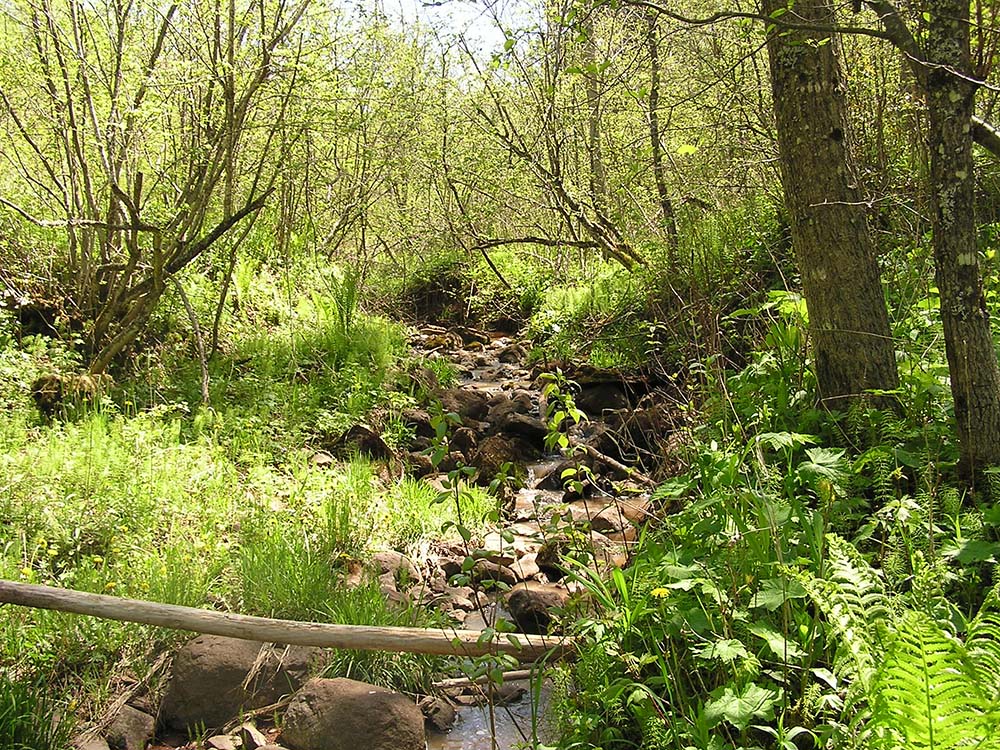
Tributary flowing into Lake Superior.
Lakeshore slopes have been impacted by natural and man-made factors including rising lake levels, changing wave action, more frequent and severe rain events, and forest disturbance. This has resulted in massive bank slumping in the past leading to excess sedimentation, impacting stream health and nearshore habitat in Lake Superior. Restoring and maintaining healthy and resilient forest cover along these shorelines is one of the best ways to protect water quality in these critical habitats.
As a result of past land disturbance activities, forest habitats on Landmark’s 53-acre Mouth of the Middle River Conservation Area are generally composed of mature aspen and birch which are declining in health due to their relatively short lifespans. There is also a lack of conifer species that provide important water quality benefits as they slow the flow of water across the landscape due to their year-round foliage.
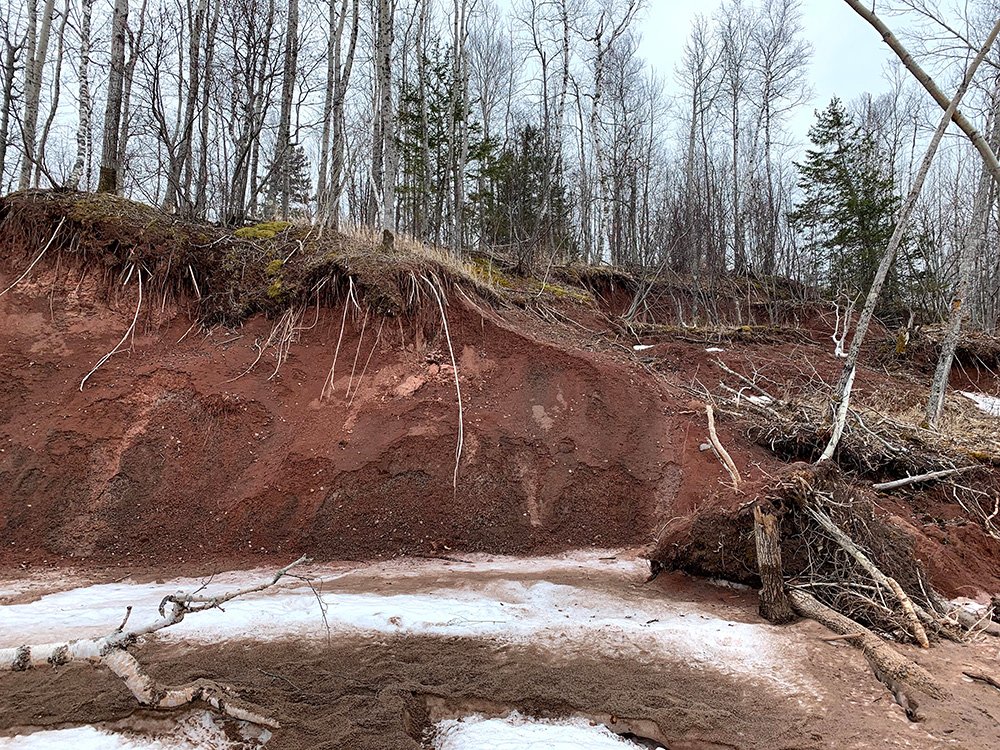
Erosion of clay banks along Lake Superior.
This past May we planted 2,000 tree and shrub seedlings throughout 15 acres of declining aspen and birch forest. Species planted included white pine, white spruce, swamp white oak, chokecherry, and highbush cranberry. “This project is helping to jump-start forest succession and direct management toward longer-lived and more climate resilient species while also increasing plant diversity,” said Erika Lang, Conservation Manager.