
A Major Step Achieved in Restoration Journey at Maiden Rock Bluff

Lake Pepin overlook from dry bluff prairie.
Atop the iconic Maiden Rock Bluff overlooking Lake Pepin in Stockholm, Wisconsin, is a complex of protected land consisting of remnant bluff prairie, tallgrass prairie, and oak woodland. Landmark’s most recent Impact Report features a story highlighting the significance of seed collection and dispersal for expanding habitat. We’re thrilled to share yet another update. In late fall, a major step in the decades-long restoration effort at this site was achieved through the selective removal of black walnut trees.
The goal is to improve the health of the oak woodland by opening the canopy to allow more sunlight to reach the forest floor. “Walnut trees were not historically a dominant component of oak woodlands in this region, and they were interfering with oak regeneration and the growth of desirable understory species,” said Conservation Manager Andrew Norman. “Selective removal of these trees was done strategically late in the year to minimize soil erosion and disturbance to vegetation and wildlife.”
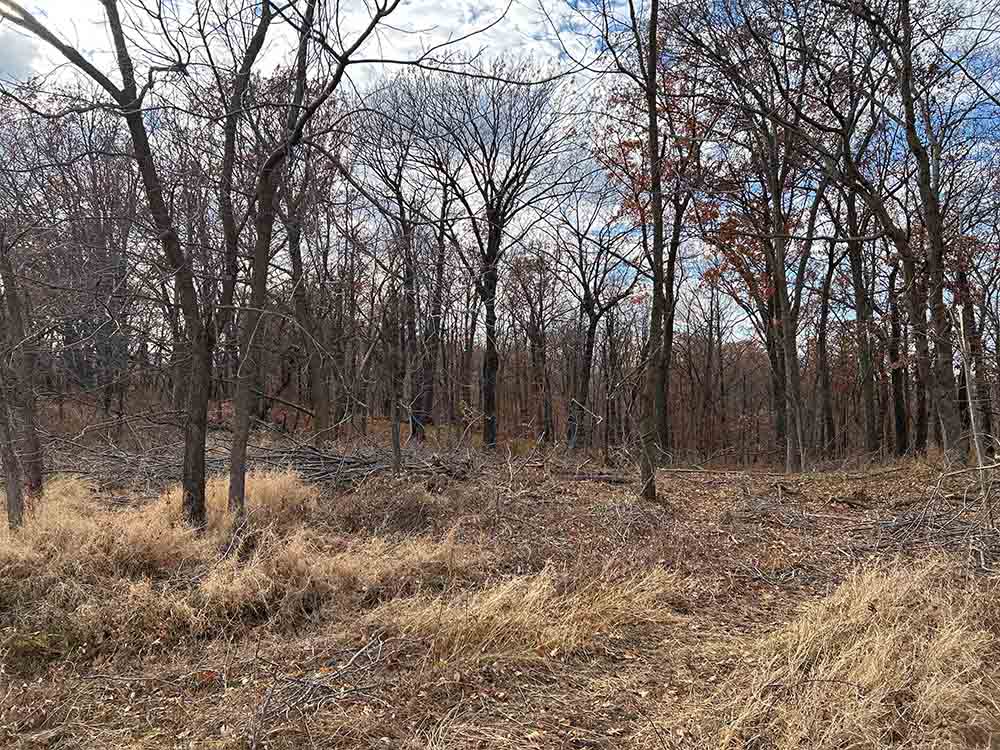
Oak woodland after thinning.
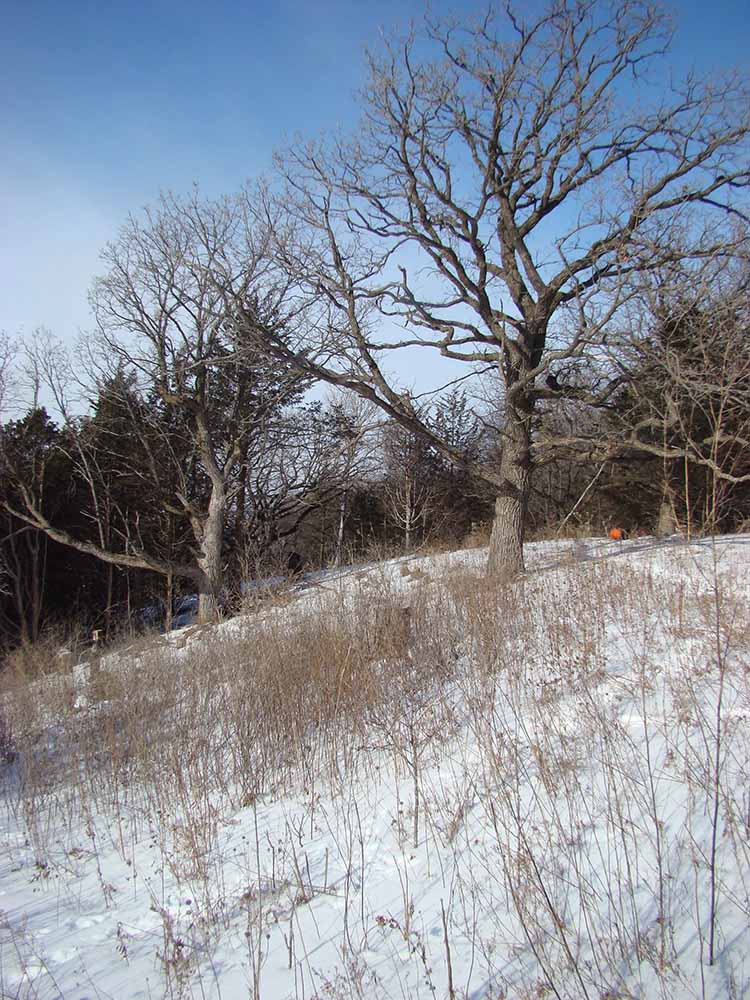
Open grown oaks in an area previously cleared.
The harvest was overseen by Landmark’s conservation staff in collaboration with our partners at the Department of Natural Resources (DNR). After the tree thinning, native seeds collected by volunteers last October were spread in the woodland. Over winter they will undergo stratification, which will break their dormancy and allow them to germinate in the spring. With more sunlight reaching the forest floor, these understory species will become established and thrive.
This isn’t the first time the woods in this complex have been managed to open the canopy. In 2017, other forested areas were thinned. In combination with prescribed burns, this management transformed the area to a more open woodland structure representative of historical vegetation softening the woodland edge where it blends into the tallgrass and bluff prairie habitat.

Golden Alexander and Ohio Spiderwort in the tallgrass prairie.
Protecting and managing these rare and declining ecosystems is a long and ongoing process that safeguards habitat for various wildlife species, many of which are also in decline due to habitat loss. Located along the Mississippi River, this land is important for migratory and resident birds, pollinators, insects, reptiles, and several other species. These natural communities are an important part of our natural legacy.
Without management, they are at risk of disappearing, but your support has ensured that we make steady progress on this restoration journey every year. Your gift is the difference between losing this habitat and preserving it for generations to come! Thank you.
Landmark Conservancy purchased Maiden Rock Bluff in 2004, and it was dedicated as a State Natural Area that same year. Landmark managed the property until 2011, when it was transferred to the DNR who currently owns and manages the land. The adjacent Elizabeth Hedin Addition was donated to Landmark in late 2018, and restoration in partnership with the DNR began shortly thereafter.
Landmark also holds a conservation easement on a neighboring, privately owned property. In total, Landmark has protected 577 acres in this complex through three different land protection projects.

We love this place! Thx for your work!!!!
A very interesting and exceptionally well written article. Congratulations!